Introduction
Are you tired of the constant maintenance costs and structural failures due to corrosion in concrete? Traditional steel rebar often falls short in harsh environments, leading to costly repairs. But there's a better solution—Fiberglass Rebar. This material is changing the way we reinforce concrete structures, offering unmatched durability and strength.
In this article, we will explore how fiberglass rebar works, its key advantages, and how it can be used in concrete design. By the end of this post, you will have a clear understanding of how GFRP can improve your concrete projects while reducing long-term costs and maintenance needs.
Understanding Fiberglass Rebar and Its Benefits
Composition and Structure of Fiberglass Rebar
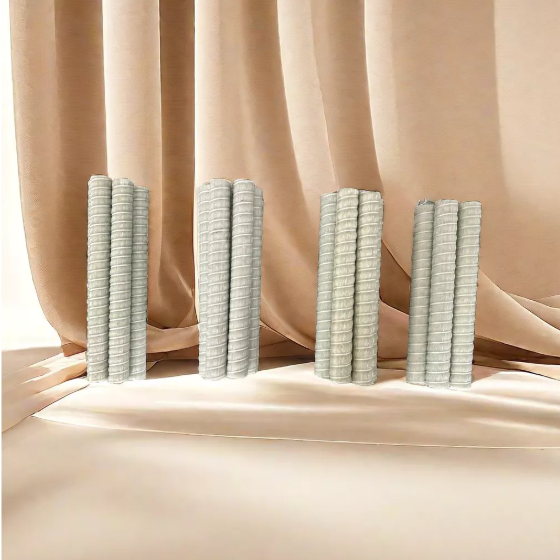
Fiberglass rebar is a composite material made from high-strength fiberglass fibers embedded in a polymer matrix, usually epoxy or vinyl ester. These fibers provide the necessary strength, while the polymer matrix bonds them together and protects them from the surrounding concrete. The combination of fiberglass and polymer ensures that the material remains strong yet lightweight, offering a high degree of flexibility for various structural applications.
Advantages of Fiberglass Rebar
Corrosion Resistance: GFRP is completely immune to corrosion, even in chloride-rich environments like marine structures. Steel, by contrast, suffers from rust when exposed to moisture or chemicals, significantly reducing its lifespan. GFRP’s resistance to corrosion makes it a more durable and cost-effective solution for structures in high-moisture or chemically aggressive environments.
Lightweight: GFRP is about 75% lighter than steel, which leads to lower transportation and handling costs, as well as faster installation times. Its lightweight nature makes it easier to transport and install, saving both time and money on labor costs.
High Strength-to-Weight Ratio: Despite its light weight, GFRP provides an impressive strength-to-weight ratio. This makes it capable of handling heavy loads without adding substantial weight to the structure, an essential factor in optimizing the overall design and performance of reinforced concrete.
Non-Conductive: Unlike steel, GFRP does not conduct electricity. This makes it particularly useful for projects involving electrical components or in areas where electromagnetic interference is a concern, such as MRI rooms or data centers. The non-conductive nature of GFRP also contributes to its safety and reliability in various specialized applications.
Fiberglass Rebar vs. Steel Rebar: A Comparison
| Property | Fiberglass Rebar (GFRP) | Steel Rebar |
| Tensile Strength | 600–1200 MPa | 400–600 MPa |
| Elastic Modulus | 45–60 GPa | 200 GPa |
| Corrosion Resistance | Excellent | Poor (prone to rust) |
| Weight | 75% lighter than steel | Heavier |
| Electrical Conductivity | Non-conductive | Conductive |
| Service Life | 75+ years | 30-50 years |
Core Design Principles for Using Fiberglass Rebar
Material Properties and Performance in Concrete
Fiberglass rebar has different mechanical properties than steel, which must be considered in the design phase. The tensile strength of GFRP ranges from 600–1200 MPa, significantly higher than steel’s 400–600 MPa. However, GFRP's elastic modulus is lower (45-60 GPa), meaning it is more flexible than steel, which has an elastic modulus of approximately 200 GPa.
This difference in stiffness impacts the design calculations, especially in terms of deflection and crack control. Designers must account for the fact that GFRP does not provide the same resistance to bending as steel. Its higher flexibility requires careful attention to factors such as load-bearing capacity and structural deflection during the design process.
Design Considerations for Flexural and Shear Strength
When designing with fiberglass rebar, flexural strength must be calculated based on balanced failure conditions. Unlike steel, which undergoes plastic deformation before failure, GFRP fails in a more brittle manner when stretched too far. This means that engineers must design structures to avoid tension failure in GFRP. The inherent brittleness of GFRP requires careful planning to ensure that no excessive stress is applied to the material.
Shear design is another critical aspect. While GFRP can handle tensile loads effectively, its shear capacity is different from steel, and often requires the use of additional shear reinforcement, either in the form of steel or GFRP stirrups. Since GFRP does not perform as well as steel in shear, this design consideration is crucial to avoid structural failure.
Serviceability and Crack Control Considerations
The deflection of a structure is a key serviceability consideration when using GFRP. Due to its lower stiffness, the deflection of GFRP-reinforced concrete structures can be higher than steel-reinforced ones. Engineers need to account for this by checking that the deflection limits are met and that the structure does not exceed acceptable cracking thresholds. Excessive deflection can lead to structural issues over time, especially in areas subject to high traffic or dynamic loads.
In terms of crack control, GFRP’s lower stiffness means that cracks in concrete may propagate more easily. To mitigate this, larger bar diameters or closer spacing can be used to reduce the potential for excessive cracking. Additionally, the use of additional reinforcement such as steel stirrups can improve the overall crack resistance and durability of the structure.
Lap Splice and Surface Treatment Considerations
GFRP requires longer lap splice lengths than steel because its bond strength with concrete is not as high as steel’s. Ensuring adequate bonding between GFRP and concrete is essential for maintaining the integrity of the structure over time. If the splice length is too short, the bond between the concrete and rebar may fail, compromising the structure’s performance. Surface treatments, such as sand-coating or helical wrapping, are often used to improve the bond strength between GFRP bars and concrete, ensuring that the reinforcement is properly anchored within the structure.
Practical Construction and Detailing Tips for GFRP
Installation Guidelines for Fiberglass Rebar
Fiberglass rebar requires specific handling and installation techniques. One important consideration is the bend radius: GFRP bars cannot be bent on-site like steel bars. They must be cut to the desired lengths using diamond blade saws, which can add to the installation time and cost. This limitation requires advanced planning and pre-fabrication, which can affect project timelines.
Proper support and tying are also critical to ensuring that the GFRP rebar stays in place during the pouring of concrete. Using plastic or non-corrosive supports helps prevent any damage or displacement of the bars during construction. Special care must be taken during the installation process to ensure that the GFRP reinforcement remains properly positioned and does not shift before the concrete is poured.
| Consideration | Fiberglass Rebar (GFRP) |
| Bend Radius | Cannot be bent on-site (use cutting tools) |
| Cutting | Requires diamond blade saws |
| Handling | Requires careful handling (avoid damage) |
| Support and Tying | Use non-corrosive or plastic supports |
| Curing | Needs proper temperature and humidity during curing |
Ensuring Construction Quality with GFRP
During the concrete pouring and curing process, it is essential to maintain the right temperature and humidity to prevent thermal shock, which could damage the GFRP reinforcement. Proper curing helps to ensure that the bond between the GFRP bars and concrete is strong, which is critical for long-term structural performance. Curing should be carefully monitored to prevent premature drying, which can weaken the overall bond strength of the concrete and the reinforcement.
Comparing Fiberglass Rebar with Traditional Steel Rebar
Strength and Durability: GFRP vs. Steel
Fiberglass rebar excels in durability, especially when compared to steel in corrosive environments. While steel corrodes over time, leading to a reduction in its structural integrity, GFRP maintains its strength throughout the structure’s lifespan. This makes GFRP particularly valuable for applications such as bridge decks, coastal infrastructure, and industrial flooring, where corrosion would severely limit the life of steel reinforcement.
Cost Comparison: GFRP vs. Steel Rebar
While the initial cost of GFRP may be slightly higher than steel, its long-term cost benefits outweigh the upfront investment. Since GFRP is corrosion-resistant, it requires much less maintenance over time, reducing the need for costly repairs and replacements. Additionally, the lightweight nature of GFRP reduces transportation costs, and its faster installation can lead to labor savings, making it a cost-effective solution in the long run.
| Cost Factor | Fiberglass Rebar (GFRP) | Steel Rebar |
| Initial Cost | Higher than steel | Lower than GFRP |
| Transportation Costs | Lower (lightweight) | Higher (heavy) |
| Installation Costs | Reduced labor costs (easy handling) | Higher labor costs (heavy) |
| Maintenance/Repair Costs | Low (corrosion-resistant) | High (corrosion repairs) |
| Long-term Durability | Excellent (up to 75+ years) | Moderate (30-50 years) |
Environmental Benefits of Fiberglass Rebar
GFRP is a more eco-friendly choice than steel. Its longer service life means fewer replacements and less material waste. Additionally, it can be recycled, further reducing its environmental impact. The reduced need for repairs and replacements also results in a lower carbon footprint over the lifespan of a structure, making it a sustainable choice for modern construction projects.
Marine and Coastal Structures: GFRP is an excellent choice for infrastructure exposed to salty water, where traditional steel reinforcement would quickly degrade.
Bridge Decks and High-traffic Areas: The lightweight nature of GFRP also reduces the overall weight of the structure, which can improve its long-term performance under heavy traffic loads and reduce the overall structural load.

Case Studies of Fiberglass Rebar in Real-World Projects
Designing a Bridge with GFRP Reinforcement
A recent bridge project utilized GFRP for the reinforcement of both the deck and support beams. The project highlighted GFRP’s superior corrosion resistance and its ability to withstand the harsh environmental conditions of the area. Engineers opted for GFRP bars to ensure the structure’s durability, and the design guarantees a lifespan of over 75 years with minimal maintenance. The bridge’s performance exceeded expectations, demonstrating the effectiveness of GFRP in large-scale, high-durability applications and confirming its reliability as a long-term solution.
Building a Seawall with Fiberglass Rebar
In a seawall construction project, Fiberglass Rebar was used to reinforce the concrete, specifically chosen to combat the corrosive effects of saltwater. After several years of exposure, the seawall has shown no signs of corrosion, proving the material's resilience in harsh marine environments. This project demonstrated the cost-saving benefits of GFRP compared to traditional steel reinforcement, particularly in environments where steel would typically degrade quickly. The long-lasting performance of GFRP required minimal maintenance, further emphasizing its value in infrastructure exposed to extreme conditions.
Conclusion
Fiberglass rebar is revolutionizing concrete reinforcement by providing unmatched durability and strength. It offers significant environmental benefits, especially in challenging environments where steel rebar fails. As the construction industry shifts towards more sustainable solutions, the adoption of GFRP is expected to increase.
GFRP is corrosion-resistant, lightweight, and designed to withstand harsh conditions, making it ideal for marine, coastal, and high-moisture areas. Its superior performance leads to reduced maintenance costs, providing long-term savings. Anhui SenDe New Materials Technology Development Co., Ltd. offers GFRP products that provide exceptional value, ensuring longevity and reliability in all concrete projects.
FAQ
Q: What is Fiberglass Rebar and how is it different from traditional steel rebar?
A: Fiberglass Rebar (GFRP) is a composite material made from fiberglass fibers embedded in a polymer matrix. Unlike steel rebar, GFRP is corrosion-resistant, lightweight, and non-conductive, making it ideal for harsh environments like coastal areas or industrial settings.
Q: How do I design concrete structures using Fiberglass Rebar?
A: To design with Fiberglass Rebar, engineers need to consider its tensile strength, elastic modulus, and installation requirements. GFRP is more flexible than steel, requiring adjustments to deflection and crack control calculations.
Q: What are the advantages of using Fiberglass Rebar in concrete structures?
A: Fiberglass Rebar offers several advantages, including corrosion resistance, lighter weight, and better performance in harsh environments. It also reduces long-term maintenance costs compared to steel rebar.
Q: How does the cost of Fiberglass Rebar compare to steel rebar?
A: Although Fiberglass Rebar may have a higher initial cost, it offers long-term savings due to reduced maintenance and longer lifespan, especially in corrosive environments where steel rebar would need frequent repairs.
Q: Why should I choose Fiberglass Rebar for marine or coastal structures?
A: Fiberglass Rebar is ideal for marine or coastal structures because it is resistant to corrosion caused by saltwater, significantly enhancing the durability and reducing the need for costly repairs over time.


