
Views: 0 Author: Site Editor Publish Time: 2025-12-19 Origin: Site


In the world of modern construction, materials are chosen not only for their strength but also for their flexibility and adaptability. GFRP rebar (Glass Fiber Reinforced Polymer rebar) is gaining popularity due to its durability, corrosion resistance, and lightweight nature. However, one common question that arises when considering GFRP rebar for a project is whether it can be bent during installation. At Anhui SenDe New Materials Technology Development Co., Ltd., we specialize in manufacturing high-quality GFRP rebar products that are designed for a wide range of applications. In this article, we will explore the bending capabilities of GFRP rebar, its limitations, and the practical solutions that can be applied during construction.
Bending reinforcement materials like rebar is a common practice in construction, especially when creating custom shapes for a variety of structures. The ability to bend reinforcement can be crucial for ensuring that the structural integrity of a building or infrastructure project is maintained, especially when dealing with corners, curved surfaces, or intricate designs.
In many construction projects, the need to form corners, custom geometries, or curved concrete surfaces requires the rebar to be bent into specific shapes. For instance, parking garages, bridges, and architectural facades often require rebar to be bent into various angles or arcs. GFRP rebar, while offering great benefits in terms of corrosion resistance and strength, must be able to handle these bending requirements to be fully effective.
The bending ability of reinforcement plays a critical role in project planning. Construction timelines, labor costs, and material waste can all be affected by how easily and efficiently the rebar can be bent. If GFRP rebar does not bend as easily as steel, construction projects may require additional steps, such as the use of mechanical connectors or prefabrication, which can add to the cost and time of the project. Therefore, understanding the limitations and available solutions for bending GFRP rebar is essential for successful project execution.
GFRP rebar differs significantly from traditional steel rebar in terms of its composition and physical properties. These differences can affect how the material behaves when subjected to bending forces.
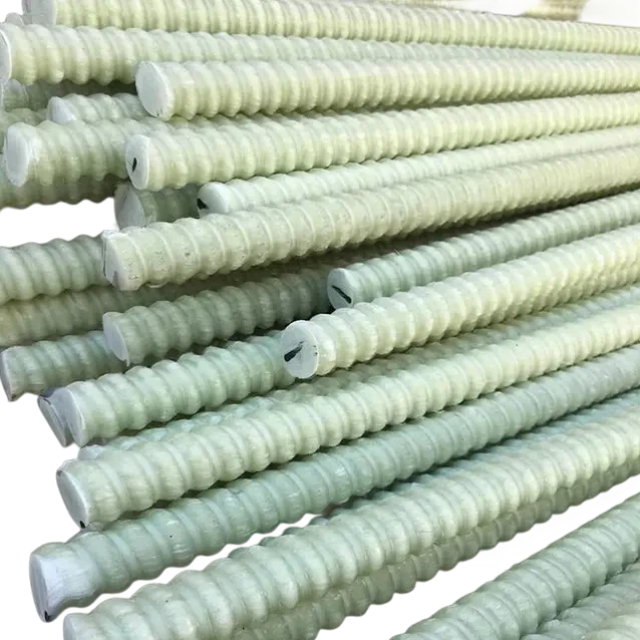
GFRP rebar is made from a composite material that consists of glass fibers embedded in a polymer resin matrix. This combination gives the rebar a unique set of properties: high strength-to-weight ratio, corrosion resistance, and non-conductive properties. However, the composite nature of GFRP rebar also means it behaves differently from steel when subjected to mechanical stresses such as bending.
Unlike steel, which can bend without breaking within certain limits, GFRP rebar is more rigid and may experience cracking or failure when bent beyond its elastic limit. This is primarily due to the glass fibers within the polymer matrix, which provide strength but also limit flexibility. As a result, bending GFRP rebar requires more careful consideration and technique.
When compared to steel, GFRP rebar is less ductile, meaning it does not stretch or bend easily without breaking. Steel has the ability to absorb bending stresses through its flexibility, while GFRP rebar tends to be more brittle in nature. While GFRP rebar is very strong and capable of withstanding high tensile forces, its ability to bend is limited due to the nature of the composite material. Therefore, it is important to understand that while GFRP rebar can be bent, it may require special handling and precautions to avoid damage.
While GFRP rebar offers numerous advantages, there are specific limitations that engineers need to consider when working with this material, especially regarding its bending capacity.
The elastic behavior of GFRP rebar is a key factor in its bending performance. Unlike steel, which exhibits a more elastic and flexible behavior, GFRP rebar has a more rigid nature. This means that the bending radius and the overall ability to bend the material are restricted by the material’s design specifications. For example, the bending of GFRP rebar is typically not recommended unless the bending radius meets the guidelines provided by the manufacturer, as bending it too sharply can cause permanent damage or failure.
GFRP rebar also has specific thermal and tensile constraints. The material performs optimally within a specific temperature range, and excessive heat can compromise its strength and flexibility. Furthermore, GFRP rebar is less capable of withstanding shear forces compared to steel, which limits its bending capabilities in certain structural applications. Engineers must account for these factors when designing structures that incorporate GFRP rebar, ensuring that the bending processes used align with the material’s limitations.
Despite the limitations of GFRP rebar when it comes to bending, there are several solutions that engineers and construction teams can employ to overcome these challenges while maintaining the material’s integrity.
One of the most effective solutions for incorporating GFRP rebar into projects that require bending is the use of prefabricated bends. Prefabrication allows the GFRP rebar to be bent in a controlled environment before it is delivered to the construction site. This method ensures that the rebar is bent to the correct specifications and minimizes the risk of damage during installation. It also helps streamline the construction process, reducing labor time and improving overall project efficiency.
For projects that require custom shapes or angles, mechanical connectors can be used to join sections of GFRP rebar that have been pre-bent or fabricated. These connectors can help ensure that the structural integrity of the project is maintained, even if the rebar cannot be bent directly on-site. In some cases, engineers may opt for custom-fabricated GFRP rebar that meets the specific needs of the project, ensuring that the reinforcement is both functional and cost-effective.
To maximize the effectiveness of GFRP rebar and avoid damaging it during installation, certain best practices should be followed.
When handling GFRP rebar on-site, it is important to avoid applying excessive force that could lead to bending or cracking. Workers should be trained to handle the material carefully, ensuring that it is properly supported during transportation and installation. Additionally, the rebar should be stored in a way that prevents any unnecessary stress or impact that could cause damage.
To avoid damage when bending GFRP rebar, it is important to use the correct tools and techniques. The rebar should be bent slowly and steadily, following the manufacturer's recommended bending radius. Using specialized bending tools designed for GFRP rebar can help prevent the material from cracking or breaking during installation.
In many construction projects, GFRP rebar has been successfully used in applications that require bending. Some examples include parking garages, complex concrete shapes, and flatwork, where the rebar must be bent to fit specific design requirements.
In parking garages, for instance, the need to form curves and angles in the concrete can require GFRP rebar to be bent into various shapes. Similarly, in the construction of complex concrete structures, GFRP rebar is used to reinforce intricate designs, including arches and curved surfaces. In these cases, prefabricated bends and mechanical connectors are often employed to achieve the desired shapes without compromising the material's integrity.
GFRP rebar is a highly versatile and durable material, but it does come with certain limitations when it comes to bending. Understanding these limitations and applying the correct techniques is essential for ensuring the successful use of GFRP rebar in construction projects. Whether using prefabricated bends, mechanical connectors, or custom fabrication, engineers and construction teams can overcome these challenges while maintaining the material's performance and structural integrity. At Anhui SenDe New Materials Technology Development Co., Ltd., we are committed to providing high-quality GFRP rebar that meets the needs of modern construction projects, offering both safety and reliability in even the most demanding applications.
Contact Us to learn more about our GFRP rebar products and how they can help improve the efficiency and durability of your construction projects.
1. Can GFRP rebar be bent on-site?
Yes, GFRP rebar can be bent on-site, but it requires careful handling and specific tools to ensure the material does not crack or break.
2. What is the primary limitation of bending GFRP rebar?
The primary limitation is its rigidity compared to steel, which means it has a more limited bending radius and must be handled carefully to avoid damage.
3. How can I ensure the safe bending of GFRP rebar?
Prefabricating the bends in a controlled environment or using mechanical connectors for custom shapes are effective ways to avoid damage when bending GFRP rebar.
4. Is GFRP rebar suitable for all types of construction projects?
Yes, GFRP rebar is highly suitable for various applications, including parking garages, bridges, and complex concrete structures that require bending. However, its bending should be done according to the manufacturer’s guidelines to ensure optimal performance.


