Soil nailing is a well-established technique used to stabilize the ground in various construction projects such as retaining walls, tunnels, and slope stabilization. The goal of soil nailing is to provide structural support by inserting long, slender rods (soil nails) into the soil to reinforce and prevent soil movement. Over the years, two main types of soil nails have been utilized: traditional steel nails and the more innovative GFRP Soil Nails (Glass Fiber Reinforced Polymer).
In this article, we will explore the differences between these two types of soil nails, specifically focusing on their advantages and disadvantages regarding long-term stabilization. By the end of this article, you will have a clear understanding of why GFRP Soil Nails may be the superior choice for certain stabilization projects.
1. Understanding Soil Nailing and Its Role in Ground Stabilization
What is Soil Nailing?
Soil nailing involves the insertion of long, slender bars (soil nails) into the ground to provide support and reinforce the soil structure. These nails are typically anchored to the soil with grouting or other methods to prevent soil movement and provide stability to slopes, excavation sites, and underground structures. The technique is commonly used in retaining walls, tunnel linings, and deep excavation projects.
Why Long-Term Stabilization Matters
In any construction project that involves soil excavation or slope stabilization, long-term stability is paramount. The soil is subjected to various forces such as weather conditions, seismic activity, and the weight of structures, making it essential to employ a stabilization method that ensures enduring performance. Whether it's a tunnel, highway embankment, or hillside slope, the stability of the soil is critical for the safety and longevity of the project.
Introducing GFRP Soil Nails
GFRP Soil Nails are a more recent innovation in the soil nailing industry. Unlike traditional steel nails, GFRP soil nails are made from a combination of glass fibers and polymer resins, which offers a range of benefits in terms of corrosion resistance, durability, and weight. GFRP materials are lightweight, non-corrosive, and resistant to environmental degradation, making them an excellent choice for modern soil nailing applications, particularly in harsh environments.
2. Overview of Traditional Soil Nails
Traditional soil nails have been in use for decades and are primarily made from steel, a material known for its high strength and load-bearing capacity. However, while steel nails have been widely used and proven effective, they have several limitations.
Material Composition of Traditional Soil Nails
Steel soil nails are typically composed of high-strength steel rods that are grouted into drilled holes within the soil. The steel rods provide the strength necessary to resist shear and tensile forces acting on the soil, making them suitable for a variety of soil stabilization applications. However, steel is prone to corrosion, especially in moist, saline, or chemically aggressive environments.
Common Applications of Traditional Soil Nails
Traditional steel soil nails are commonly used in various applications, including:
Retaining walls: To stabilize embankments or prevent soil erosion.
Slope stabilization: To prevent landslides or soil shifts in hilly or mountainous areas.
Excavations: To support deep excavations, such as those found in tunnel construction.
Advantages of Traditional Steel Soil Nails
High Strength: Steel has exceptional tensile strength, making it ideal for applications that require high load-bearing capacity.
Proven Technology: Steel soil nails have been used for decades, and their performance is well-understood in the engineering community.
Cost-Effective: Steel is generally less expensive compared to newer materials, which can be an advantage in some projects.
Limitations of Traditional Steel Soil Nails
Corrosion: Steel is highly susceptible to rust and corrosion, especially in areas with high moisture, saline conditions, or aggressive chemicals. This can significantly reduce the lifespan of the nails and require frequent maintenance.
Heavy Weight: Steel is heavy, which makes transportation and installation more expensive and labor-intensive.
Maintenance: Over time, steel nails may require maintenance to address corrosion, weakening the cost-effectiveness of using steel in long-term projects.
3. GFRP Soil Nails: The Innovative Solution
GFRP (Glass Fiber Reinforced Polymer) Soil Nails represent a shift in the materials used for ground stabilization. These soil nails are made from glass fibers that are embedded in a polymer resin matrix, offering a variety of advantages over traditional steel nails.
Material Composition of GFRP Soil Nails
GFRP Soil Nails consist of high-strength glass fibers combined with resins such as vinyl ester or epoxy. The fibers provide strength and rigidity, while the resin binds the fibers together and enhances the overall durability of the material. The resulting composite is lightweight, highly resistant to corrosion, and can be tailored to meet the specific needs of a given project.
Manufacturing Process of GFRP Soil Nails
The manufacturing of GFRP soil nails typically involves a process called pultrusion or filament winding, in which glass fibers are continuously impregnated with resin and formed into a specific shape. This method allows for precise control over the fiber orientation and resin content, which directly affects the strength and performance of the GFRP nails. The final product is lightweight, non-corrosive, and highly durable.
Advantages of GFRP Soil Nails
Corrosion Resistance: Unlike steel, GFRP is completely immune to corrosion. This makes GFRP soil nails an excellent choice for use in coastal areas, waterlogged environments, and chemical-rich soils.
Lightweight: GFRP soil nails are significantly lighter than their steel counterparts, reducing transportation costs and installation time.
Non-Conductive: GFRP is non-conductive, which makes it ideal for use in electrically sensitive environments such as near power lines or electrical substations.
Low Maintenance: Due to their corrosion resistance, GFRP soil nails require very little maintenance over their lifetime, leading to cost savings in the long run.
Durability: GFRP nails have a long service life, making them a reliable solution for long-term soil stabilization.
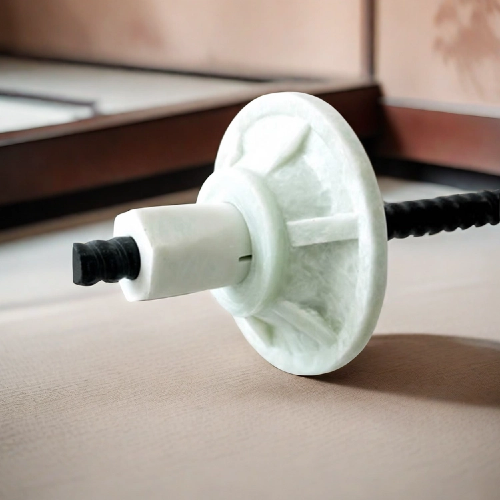
4. GFRP vs. Traditional Soil Nails: Key Comparisons
The following table compares GFRP Soil Nails and Traditional Steel Soil Nails across several key parameters relevant to long-term soil stabilization projects.
Factor | GFRP Soil Nails | Traditional Steel Soil Nails |
Material Composition | Glass fibers combined with resin | High-strength steel rods |
Corrosion Resistance | Highly resistant to corrosion | Prone to rust and degradation |
Weight | Lightweight, easy to transport | Heavy and difficult to transport |
Strength | High tensile strength but lower than steel | Extremely high tensile strength |
Durability | Excellent long-term durability | Reduced lifespan due to corrosion |
Installation Cost | Lower due to reduced transportation time | Higher due to the weight of steel and installation complexity |
Maintenance | Very low maintenance | High maintenance due to corrosion |
Environmental Impact | Environmentally friendly | Higher carbon footprint due to production and maintenance |
Safety | Non-conductive, safe in electrical areas | Conductive, poses electrical hazards |
Key Differences in Performance
Strength and Load-Bearing Capacity: While steel nails are stronger in terms of raw load-bearing capacity, GFRP Soil Nails perform comparably in most applications where high strength is required. The load-bearing capacity of GFRP soil nails is sufficient for most stabilization projects, and their additional benefits make them an attractive alternative.
Corrosion Resistance: GFRP Soil Nails outshine steel nails in this category. Steel nails are vulnerable to corrosion, especially in wet or chemically aggressive environments, which leads to maintenance issues and a shorter lifespan. GFRP Soil Nails, on the other hand, are entirely resistant to corrosion, ensuring durability in even the most challenging environments.
Installation Time and Cost: Due to their lighter weight, GFRP Soil Nails are easier to transport and install, reducing overall project costs. In contrast, steel nails are heavy, increasing transportation and installation time. The reduced maintenance of GFRP nails further offsets the initial higher costs, making them a cost-effective choice in the long run.
Maintenance and Lifespan: GFRP Soil Nails require minimal maintenance, making them ideal for long-term applications. Steel nails, however, may require frequent maintenance due to corrosion, leading to increased operational costs.
Environmental Impact
GFRP is a more environmentally friendly material than steel, primarily because it is manufactured with fewer resources and offers long-term durability without the need for chemical treatments. GFRP Soil Nails contribute to a lower overall environmental footprint in construction projects.
5. Applications of GFRP Soil Nails in Modern Construction
GFRP Soil Nails have become increasingly popular in modern construction due to their durability, light weight, and resistance to corrosion. They are used in a variety of applications, including:
Retaining Walls
GFRP Soil Nails are used to stabilize and support retaining walls, providing resistance to soil movement and erosion. Their resistance to corrosion makes them ideal for use in coastal areas or regions with high moisture content.
Slope Stabilization
In areas prone to landslides or soil shifts, GFRP Soil Nails provide long-term stabilization. They help prevent soil erosion and support natural slopes in mountainous or hilly regions.
Tunnels and Excavations
In tunnel construction and deep excavation projects, GFRP Soil Nails are used to provide support to unstable soils and prevent collapse. Their lightweight nature makes them easier to handle in confined spaces.
6. Conclusion
When it comes to long-term stabilization projects, GFRP Soil Nails are often the superior choice. With their exceptional corrosion resistance, lightweight design, minimal maintenance requirements, and extended lifespan, they offer an ideal solution for projects in harsh or corrosive environments. While traditional steel soil nails may still be suitable in certain situations due to their initial strength, GFRP Soil Nails provide a more sustainable and cost-effective option in the long run.
For construction projects that demand durability, low maintenance, and reliable performance, GFRP Soil Nails are the optimal choice. At JIMEI CHEMICAL Co., Ltd., we specialize in providing high-quality GFRP Soil Nails tailored to meet your project needs. Whether you are working on slope stabilization, retaining walls, or tunnel construction, our solutions are designed to offer long-lasting support and reduced operational costs. We invite you to reach out to us for more information or to discuss how we can support your next project with our advanced GFRP Soil Nails. Let us help you achieve the best results for your construction projects.
7. FAQ
1. What are GFRP Soil Nails?
GFRP Soil Nails are composite materials made from glass fibers and polymer resins, designed to stabilize soil and reinforce structures like retaining walls, slopes, and tunnels.
2. How do GFRP Soil Nails differ from traditional steel soil nails?
GFRP Soil Nails are lightweight, corrosion-resistant, and require little maintenance, while traditional steel nails are heavier, prone to rust, and require more upkeep.
3. What are the benefits of using GFRP Soil Nails in construction projects?
GFRP Soil Nails offer corrosion resistance, lower installation costs, reduced maintenance, and longer lifespan, making them an efficient choice for long-term stabilization.
4. Are GFRP Soil Nails more expensive than traditional steel nails?
While GFRP Soil Nails may have a higher upfront cost, their durability and minimal maintenance requirements make them a more cost-effective solution in the long run.
5. Can GFRP Soil Nails be used in all soil types?
Yes, GFRP Soil Nails are suitable for various soil types, particularly in environments with high moisture, salt content, or chemicals where steel nails would corrode.
6. How long do GFRP Soil Nails last compared to traditional soil nails?
GFRP Soil Nails have a longer lifespan than traditional steel nails due to their resistance to corrosion and environmental factors.
7. Are GFRP Soil Nails safe to use in electrically sensitive areas?
Yes, GFRP Soil Nails are non-conductive, making them ideal for use in electrical-sensitive areas such as power stations or near power lines.


